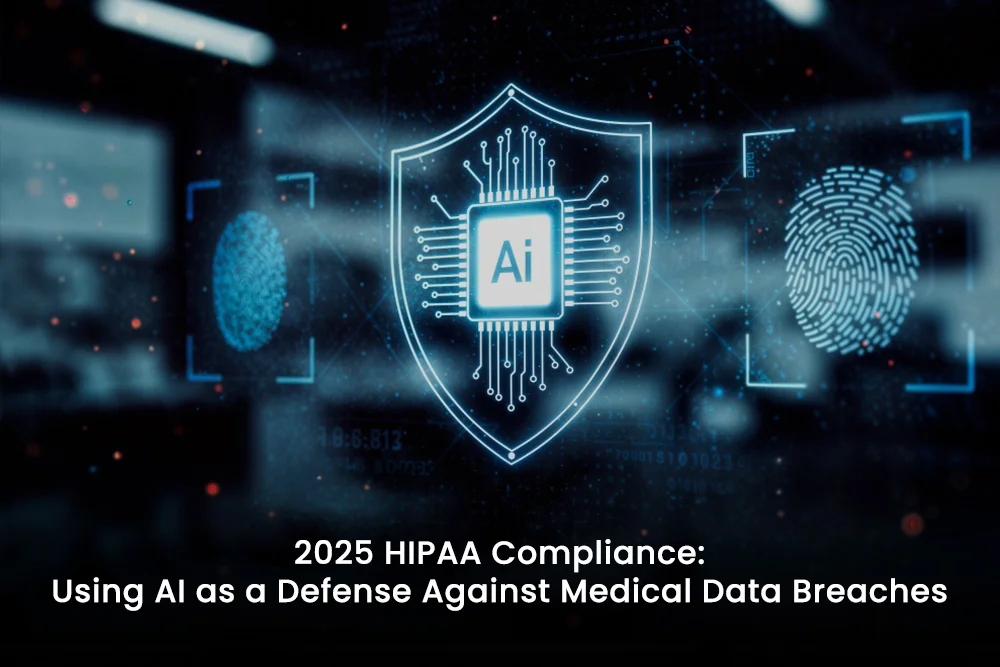
It’s clear that cybersecurity in healthcare is no longer just an IT issue. It affects how organizations operate, how they get paid, and how much trust patients and partners place in them. Protecting protected health information (PHI) is no longer something you do to stay compliant—it’s something you do to stay in business.
The risk has been building for years. During 2024, 725 reported healthcare data breaches led to the exposure of over 275 million patient records.. Around the same time, the average cost of a healthcare data breach reached $9.77 million. For independent practices and healthcare organizations, even one incident like that can cause long-term damage that’s hard to recover from.
These trends have shifted how healthcare organizations think about security. What used to be handled as a routine compliance task is now seen as a real business risk that directly impacts revenue, operations, and reputation.
Security Has Become a Business Requirement, Not a Compliance Checkbox
For many years, HIPAA compliance followed a predictable routine. Policies were reviewed annually, and staff completed training primarily to meet required standards. Security controls were often introduced after an issue surfaced. That approach worked when threats were slower and less targeted.
That is no longer the case. The HIPAA Security Rule updates introduced in 2025 marked the most significant shift in nearly twenty years, bringing stricter expectations, deeper audits, and increased oversight from the Office for Civil Rights (OCR). By 2026, organizations are no longer preparing for these changes—they are being evaluated against them.
Across the industry, concern is growing. 83% of billing companies report serious concern about the financial and reputational impact of a data breach. At the same time, healthcare organizations are recognizing that strong security practices do more than reduce risk—they reinforce trust.
In healthcare, trust is practical. Providers need confidence that their billing and operational partners can protect sensitive data. Organizations want assurance that PHI remains secure throughout every workflow. Those that can demonstrate this clearly are better positioned to retain partners and compete for new opportunities.
Where Traditional Security Approaches Still Fall Short
Despite broader awareness, many healthcare organizations continue to operate with security gaps that create real exposure.
Industry research continues to show:
- Only 35% of companies use intrusion detection or active monitoring tools
- Just 41% of billing companies have fully documented and standardized security processes
- 13% of organizations provide no compliance training to staff
Individually, these gaps may seem manageable. Together, they create compounding risk.
Threat actors today rely on automation and AI to scale attacks—drafting convincing phishing messages, probing systems continuously, and exploiting small weaknesses quickly. When security depends primarily on manual reviews or static controls, issues are often discovered only after damage has occurred.
Under updated HIPAA Security Rule expectations, reactive security is no longer sufficient. Organizations must understand what is happening across their systems in real time, not after the fact.
How Talisman Solutions Safeguards PHI Using AI and Human Oversight
At Talisman Solutions, our teams work directly with healthcare providers and billing environments. That day-to-day involvement gives us a practical understanding of how security, compliance, and operations intersect—not in theory, but inside real workflows.
In this approach, AI supports the work rather than running it on its own. Our teams bring real operational and compliance experience, while AI helps monitor activity and highlight patterns that would be hard to catch manually. Those signals are reviewed by professionals who understand how healthcare systems, billing workflows, and regulatory requirements function in practice.
When we work with healthcare organizations, AI helps keep an eye on system activity and point out things that don’t look normal. Our teams then look at those findings with full operational context to understand what’s actually happening. This makes it easier to tell the difference between a real security issue and a normal workflow change. If something does need attention, systems can be separated quickly to reduce impact instead of waiting for the situation to get worse.
We also apply current threat intelligence to identify potential weaknesses early, but those insights are always evaluated alongside operational reality. This combination—continuous monitoring paired with experienced human oversight—creates a security approach that is practical, accurate, and effective. All of this operates within HIPAA-compliant environments and is supported by active Business Associate Agreements.
Healthcare security risks rarely appear all at once. They develop quietly, across interconnected systems. AI highlights early signals, and human judgment guides responses that align with real healthcare operations.
What This Means for Healthcare Organizations Moving Into 2026
Compliance today is no longer about passing inspections alone. The HIPAA Security Rule 2025 changes made it clear that regulators are evaluating how security functions in real environments, not just whether policies exist.
Security decisions now directly influence operational stability, revenue flow, and patient confidence. This is why compliance must be treated as an ongoing operational responsibility, not a periodic review exercise.
AI-supported security helps organizations:
- Identify threats earlier
- Reduce exposure time
- Limit financial and operational disruption
- Demonstrate a proactive compliance posture during audits
Conclusion: Security That Supports the Business, Not Just the Rules
Protecting patient data is critical to doing the work correctly and staying compliant. To achieve that, current security practices must keep pace with how modern attacks actually occur.
Waiting until an audit or breach exposes weaknesses often comes at a high cost. Building layered, AI-supported security upfront creates a steadier operating environment and helps ensure compliance reflects how risk actually shows up in practice.
AI is meant to support the work, not replace experience. When combined with seasoned security and operations teams, it helps organizations protect patient data, maintain trust, and operate confidently in a complex healthcare environment.